
(For Illustrative Purposes Only)
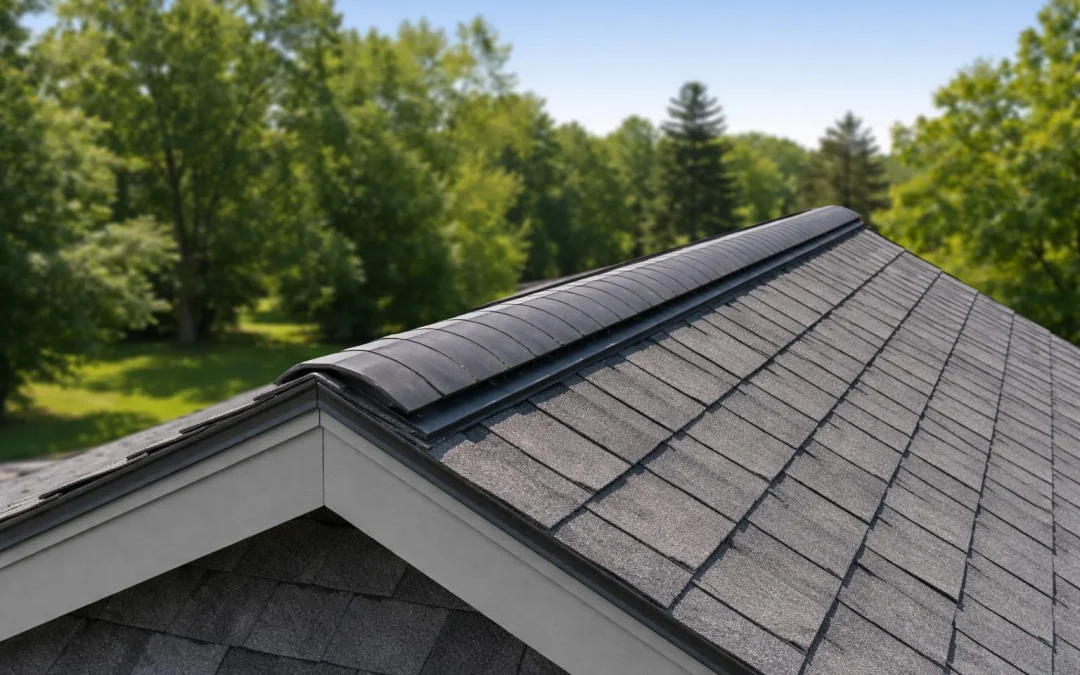
A ridge vent is a long, narrow exhaust vent that runs along the peak of a sloped roof. It lets warm, moist air escape from your attic.
If your home has a continuous roof ridge and proper soffit intake vents, a ridge vent gives steady whole-roof ventilation. This helps control heat and moisture and protects your roofing materials.
Let’s break down how ridge vents work with soffit vents and what makes them effective. We’ll also cover benefits, typical uses, installation basics, and some quick FAQs so you can figure out if a ridge vent makes sense for your place.
How Ridge Vents Work and Core Components
Function and Placement at the Roof Ridge
At the summit of the roof is a ridge vent, designed to ventilate the attic. A contractor will cut a slot about the ridge board, affix the vent, and cover it with ridge cap shingles or the vent’s own cap.
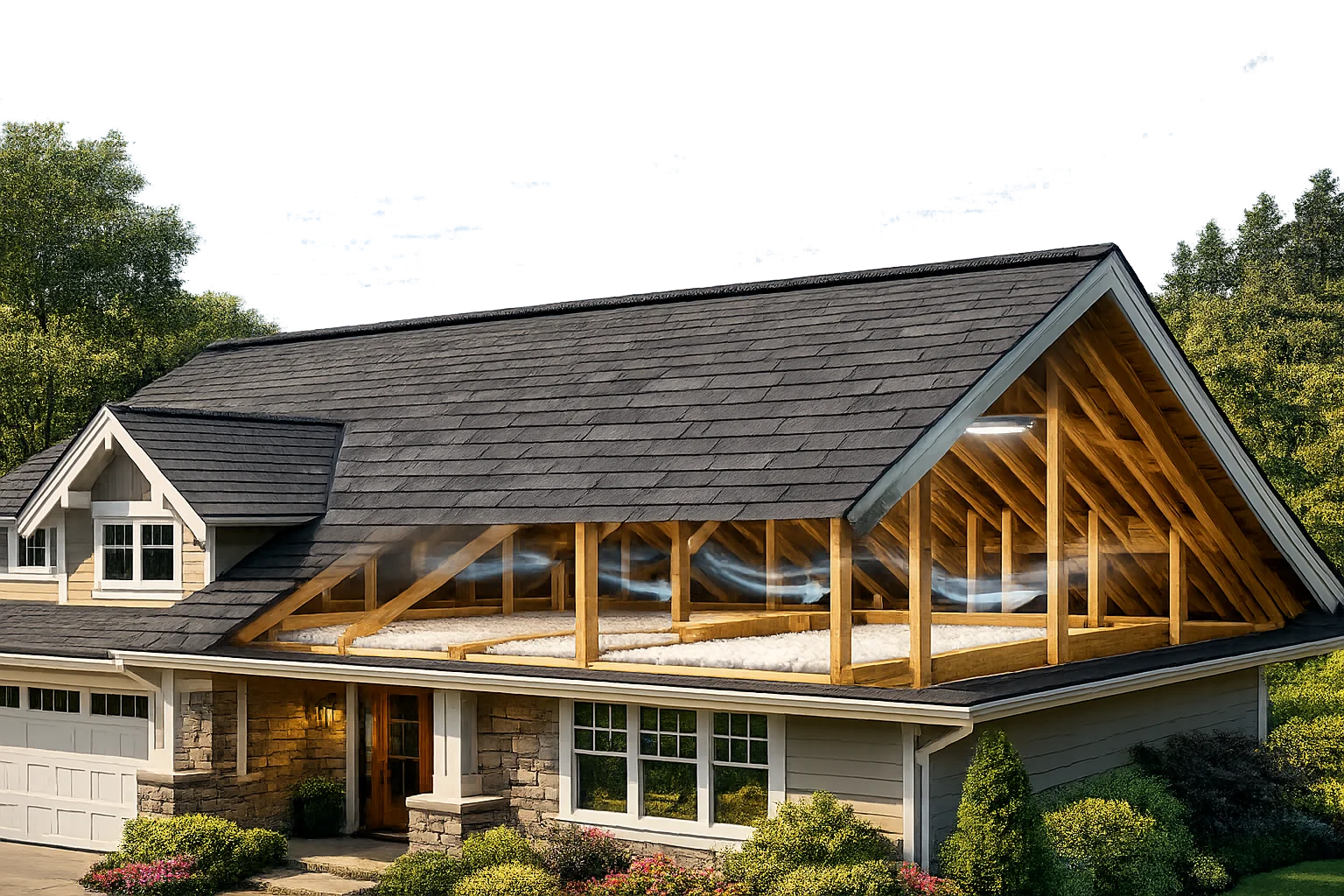
This system is designed to use natural convection. Warmer attic air will rise and exit at the ridge, while cooler air will replace it from lower.
If you have ridge vents, they should be placed at the top of long and straight roof edges. For shorter or broken-up ridges, you will likely need to use additional vents or take a different approach.
Role of Intake and Exhaust Ventilation

(For Illustrative Purposes Only)
The ridge vent expels air from the attic ventilation system and requires intake vents (typically soffit vents) at the eaves to facilitate air movement.
Ridge vents serve as an exit point for air that has been drawn in by soffit vents, which let air in at the bottom, and as an exit point for air that has been heated by the attic and to the outside ambience. Insulation or debris that blocks or covers soffit vents will result in the malfunction of the ridge vent.
A good practice is to try to keep the net free area (NFA) balanced between intake and exhaust. A roofing professional can determine the appropriate vent area requirements for your attic.
Types of Ridge Vents and Materials
You can pick between shingle-over ridge vents and exposed ridge vents. Shingle-over vents hide under ridge cap shingles and blend in, while exposed metal ones sit on top and hold up better in windy spots.
Baffled vents have channels that block wind-driven rain and debris. Materials include PVC, aluminium, and plastic. Your roof pitch, weather, and style preferences will guide your choice.
On complex roofs, you might need a mix of ridge, box, or gable vents to get full coverage.
Key Installation Considerations

(For Illustrative Purposes Only)
It is up to installers to cut the appropriate-sized slot and centre the vent. If the opening is undersized, the vent will suffer from restricted airflow; conversely, an overly large opening will compromise the ridge’s structural integrity.
The slope of the roof also determines the type and position of the vent. Steeply pitched roofs shed water more effectively than those with lower slopes, which require more thoughtful design and construction to remain water-tight.
It is best to hire an experienced professional for ridge vent installation. System failure can occur from poorly placed vents, unsealed systems, and/or blocked soffit vents.
When evaluating ridge vents, check for a continuous ridge vent, a clear vent from the chimney and skylight placements, and open intake vents.
Benefits and Best Uses of Ridge Vent Systems
(For Illustrative Purposes Only)
Energy Efficiency and HVAC Benefits
Ridge vents allow hot air to escape at the ridges of the roof to help keep the attic and the spaces below it cooler. If the attic stays closer to the outside air temperatures, then the HVAC system doesn’t have to work as hard, thus saving energy.
Even if your roof has asphalt shingles that absorb a lot of heat and increase energy costs, the ridge vent system can help reduce energy costs. However, the presence of sufficient soffit or intake vents is necessary because without them, the air flow will stop.
In most cases, ridge vents with proper soffit vent systems work better than powered attic fans, which require electricity and may exhaust conditioned air from the house.
Extending Roof Lifespan and Reducing Repairs
(For Illustrative Purposes Only)
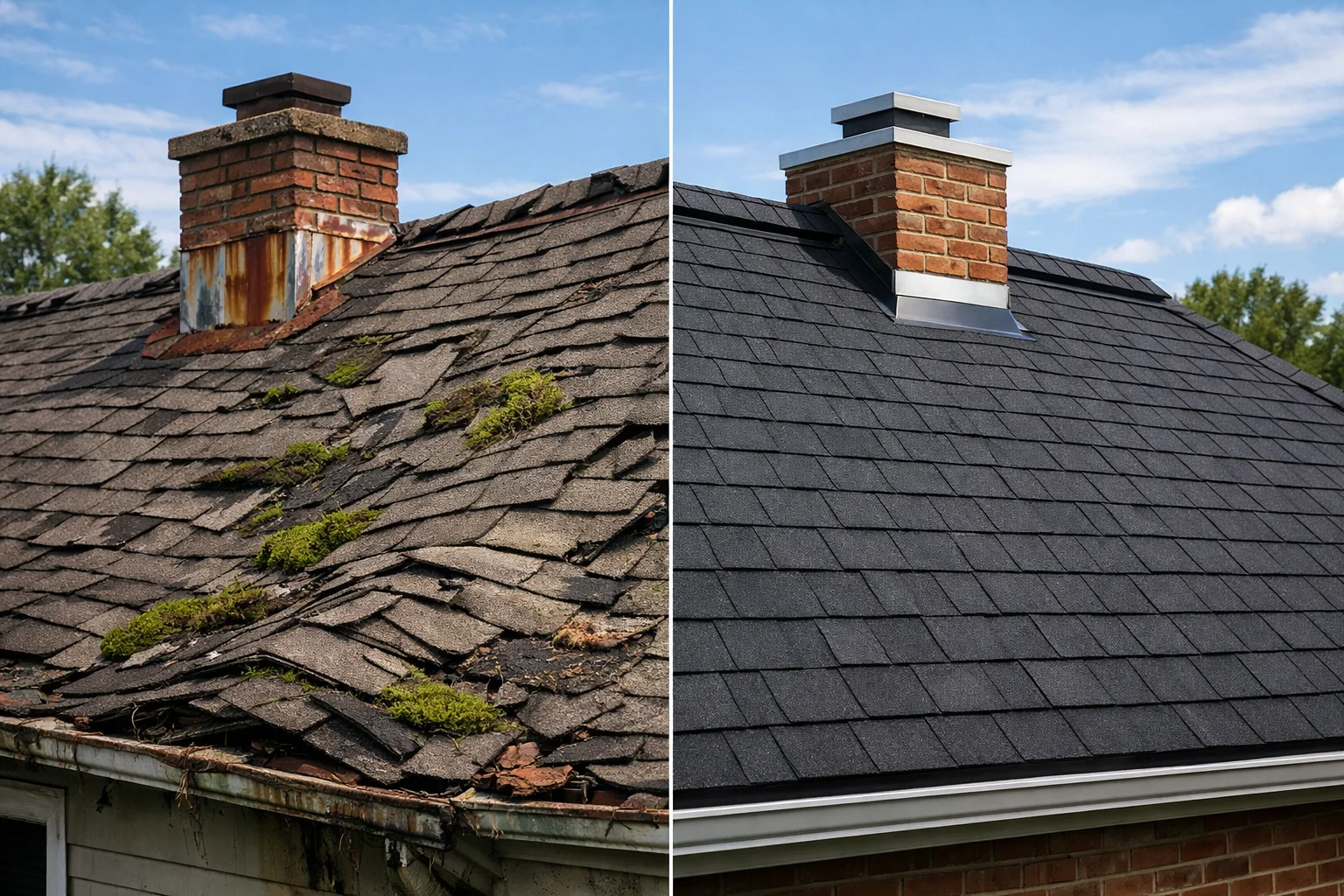
Reduced moisture levels and lower temperatures in the attic mean your roof structure and shingles last longer. The cooler and drier the attic, the less stress on the asphalt roof that causes blistering and cracking.
Because ridge vents have no moving parts, they are quite low-maintenance. Proper installation means less roof decking rot and mould, which means less costly repair work.
Long, continuous ridges provide even ventilation and consistency in roof performance.
Moisture Control and Prevention of Ice Dams
Ridge vents help get rid of humid air that would otherwise condense on cold roof surfaces. That cuts down on mould and timber rot.
In winter, a ventilated attic keeps roof deck temps even, which helps prevent ice dams at the eaves. You still need both intake and exhaust; no shortcuts.
Baffled ridge vents add protection against wind-driven rain and snow while keeping airflow steady.
Choosing the Right Ventilation Solutions

(For Illustrative Purposes Only)
Choose your components based on your roof and weather conditions. For long, straight ridges, ridge vents give ventilation for the entire roof.
For more complicated roofs or shorter ridges, you will need to use some combination of box or gable vents. For most roofs, shingle-over ridge vents will give a more subtle appearance, while for roofs in more windy locations, exposed metal ridge vents are more appropriate.
Consider your attic’s ventilation needs before adding or altering vents. In most cases, natural ventilation is preferable, and if that’s not enough, then power vents will help, but they require more energy and will need more upkeep.
Frequently Asked Questions
How does a ridge vent work to ventilate a roof space?
It sits at the roof peak and lets warm attic air escape, while cooler air enters through soffit vents. This creates a natural airflow without any fans or electricity.
What does a ridge vent look like on a finished roof?
You’ll see a low-profile strip along the roof peak, usually covered by ridge cap shingles, so it blends in. Exposed metal versions are more visible and have a raised look.
What are the main pros and cons of fitting a ridge vent?
Pros: Quiet, even ventilation that lowers attic heat and moisture. Can cut energy costs.
Cons: Needs good soffit intake vents to work. Poor installation or short ridges can limit performance.
What types of ridge vents are available, and how do they differ?
Shingle-over vents hide under ridge caps and look subtle. Exposed metal vents are tougher and more visible. Some have baffles for blocking rain and debris; pick based on your roof and local weather.
When should you avoid using a ridge vent on a roof?
If your roof doesn’t have a long, continuous ridge, skip the ridge vent. These vents really need an unbroken peak to work right.
Also, if you can’t add balanced intake vents at the soffits or eaves, ridge vents won’t do much good.